
Compass: Focus | Settling the Inner Field
Before focus can deepen, the inner space needs to settle. In this Focus Mode practice, explore how giving the mind a moment to soften — without force — creates clarity, stability, and ease.
Compass: Open | Letting the Environment In
Letting the environment in is a simple way to soften into presence. In this Open Mode practice, explore how sensing light, space, and sound without evaluation can open your awareness and ground your attention.
Compass: Focus | Attention Without Tension
Focus doesn’t need to feel tight or effortful. In this Focus Mode practice, explore how softening the body and loosening subtle tension can create clearer, more sustainable attention throughout the day.
Compass: Focus | Returning to One Point
The act of returning — to the breath, a mantra, or a quiet inner image — is the foundation of Focus Mode. In this practice, explore how gently gathering your attention back to one point creates clarity, patience, and inner steadiness.

Compass: Open | Meeting Emotion Without Fixing
Not every emotion needs to be fixed. In this Open Mode practice, explore how sensing emotion as simple physical movement — without changing it — can bring more ease and presence into your day.

Compass: Focus | Holding a Quiet Inner Image
A soft internal image can become a steadying point in a busy mind. In this Focus Mode practice, explore how holding a quiet inner picture — even for one breath — can bring clarity and ease.

Compass: Open | Hearing the Whole Soundscape
Sound can become a field of awareness rather than a distraction. In this Open Mode practice, explore how widening your listening to include the whole soundscape can open the mind and soften tension throughout the day.
Compass: Focus | A Single Mantra in a Busy Day
A single mantra can become an anchor in the middle of a rushed day. In this Focus Mode practice, explore how repeating one simple phrase can steady your attention and bring you back to center.
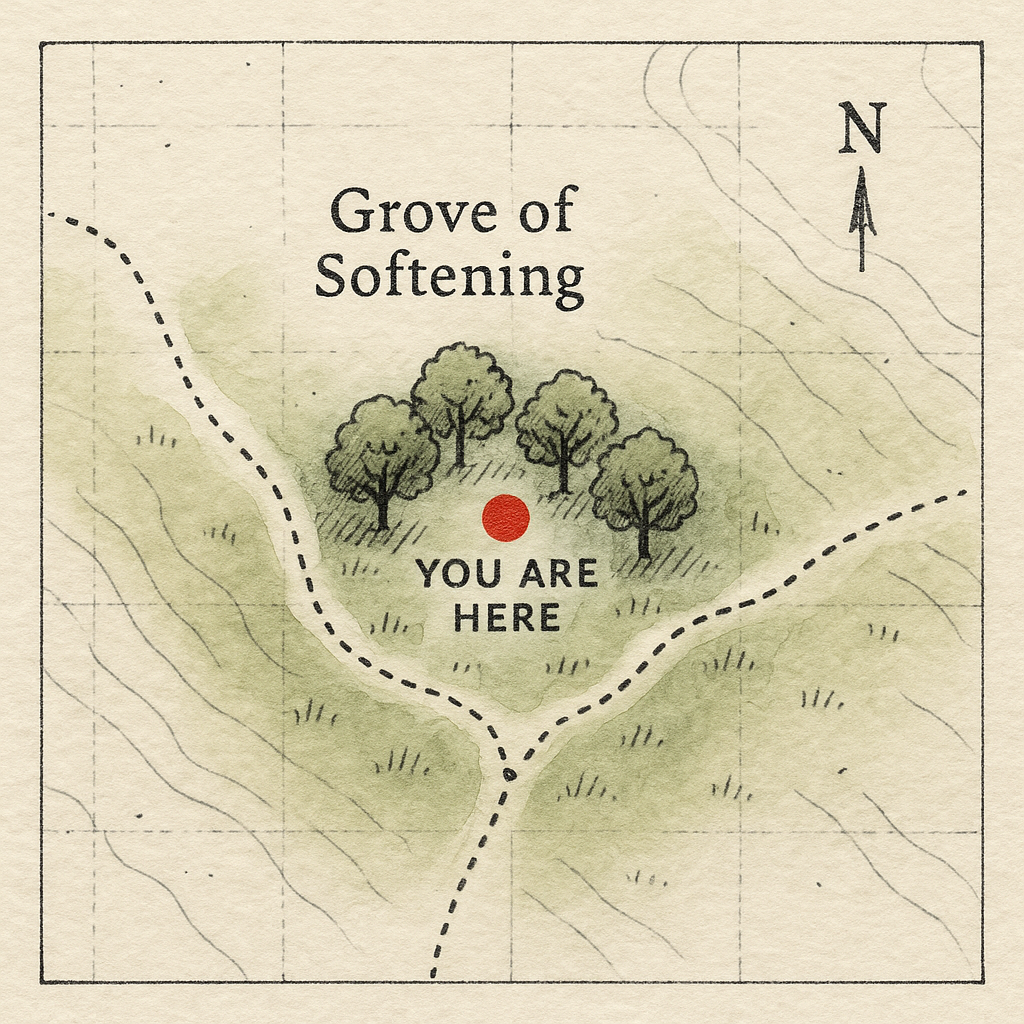
Inner Map: The Grove of Softening
This stage of meditation brings the body into a softer, more open state. As tension loosens, breath deepens and ease becomes the natural direction of your practice.
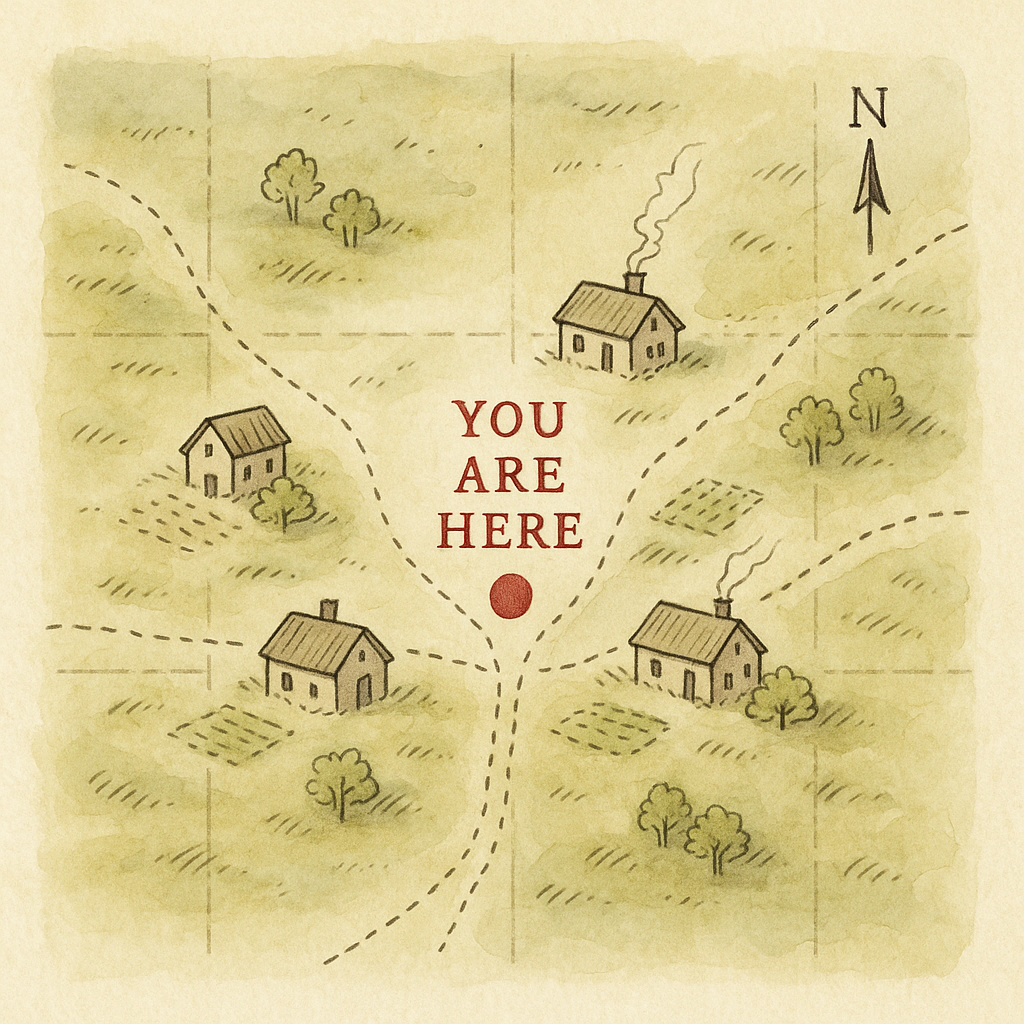
Inner Map: The Village of Everyday Mindfulness
Mindfulness becomes most real when it enters everyday life. This stage invites you to bring presence into ordinary moments — walking, speaking, cooking, pausing — letting awareness blend quietly with your routine.
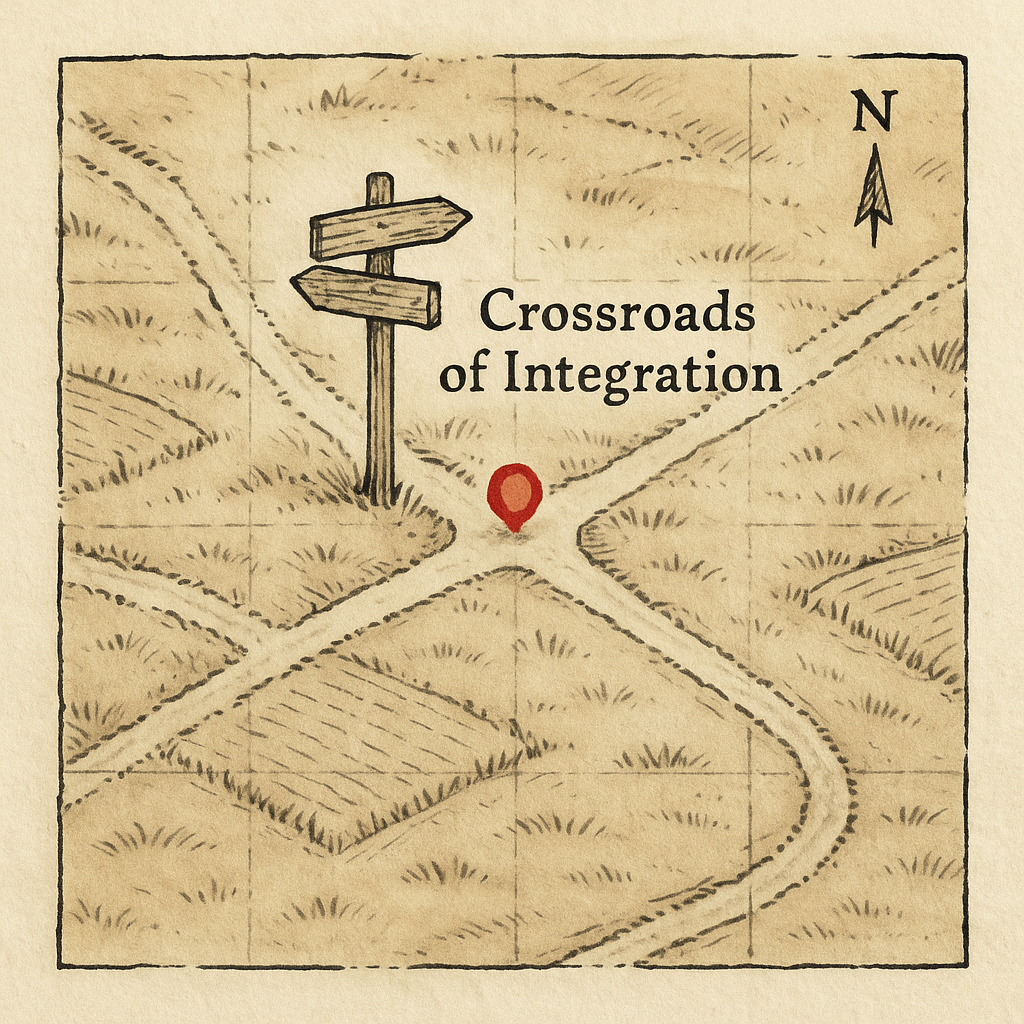
Inner Map: The Crossroads of Integration
Meditation becomes most meaningful when it begins to shape your everyday life. This stage invites you to bring one small thread of your practice — breath, patience, presence — into ordinary moments throughout the day.
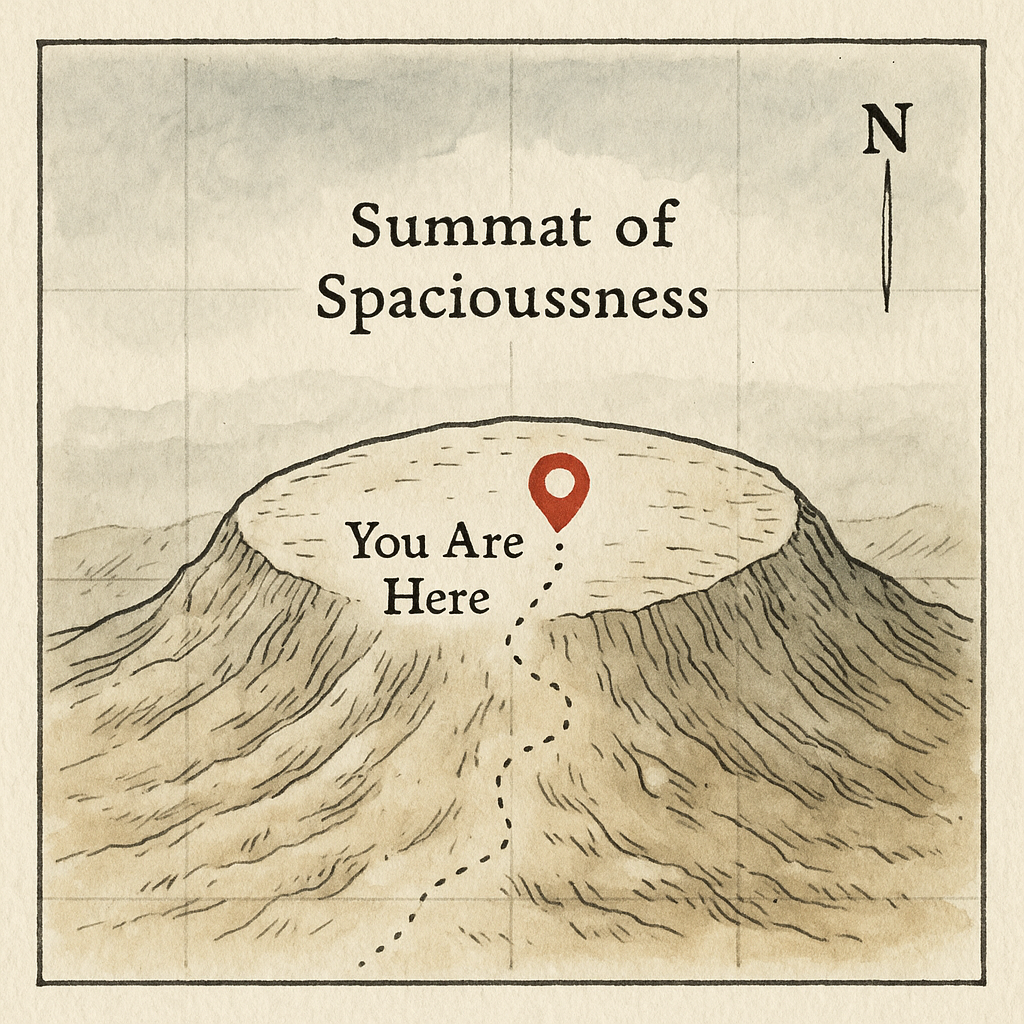
Inner Map: The Summit of Spaciousness
Spaciousness arises when effort softens and the mind begins to open. In this stage of meditation, awareness widens naturally, offering a quiet, grounded sense of ease.

Inner Map: The Mountain of Presence
Presence doesn’t come from force — it comes from staying close to what’s here. In this stage of meditation, awareness rises like a steady mountain, offering clarity that’s quiet, grounded, and natural.

Inner Map: The Forest of Shadow
Some stages of meditation bring you into deeper emotional terrain. In this shaded part of the inner landscape, feelings and patterns surface quietly. The practice is to stay grounded, steady, and curious as they appear.
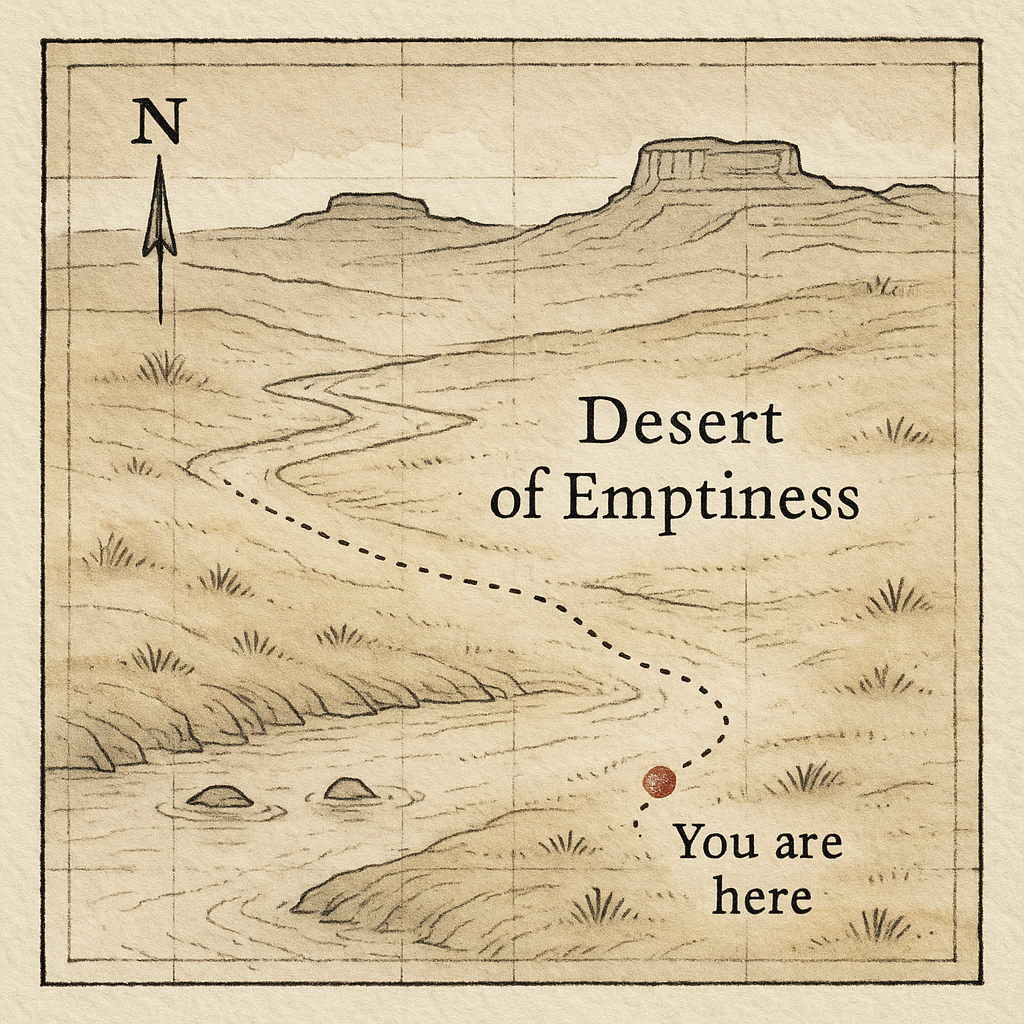
Inner Map: The Desert of Emptiness
Sometimes meditation opens into quiet, spacious terrain. This stage invites you to rest in simplicity without searching for more — letting emptiness be a place of ease rather than uncertainty.
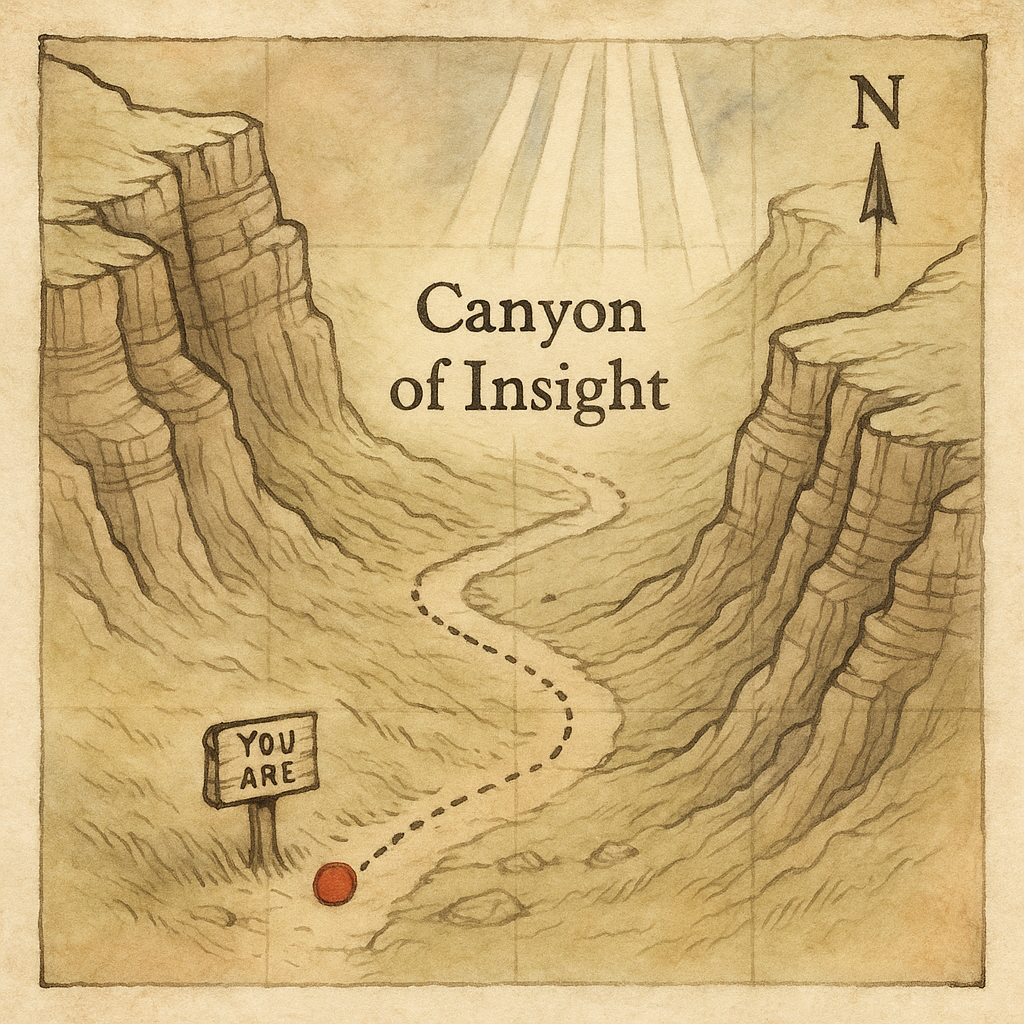
Inner Map: The Canyon of Insight
Insight in meditation is usually subtle — a small shift in how you see or feel something. This stage invites you to notice clarity when it appears, stay grounded, and let each moment pass naturally.
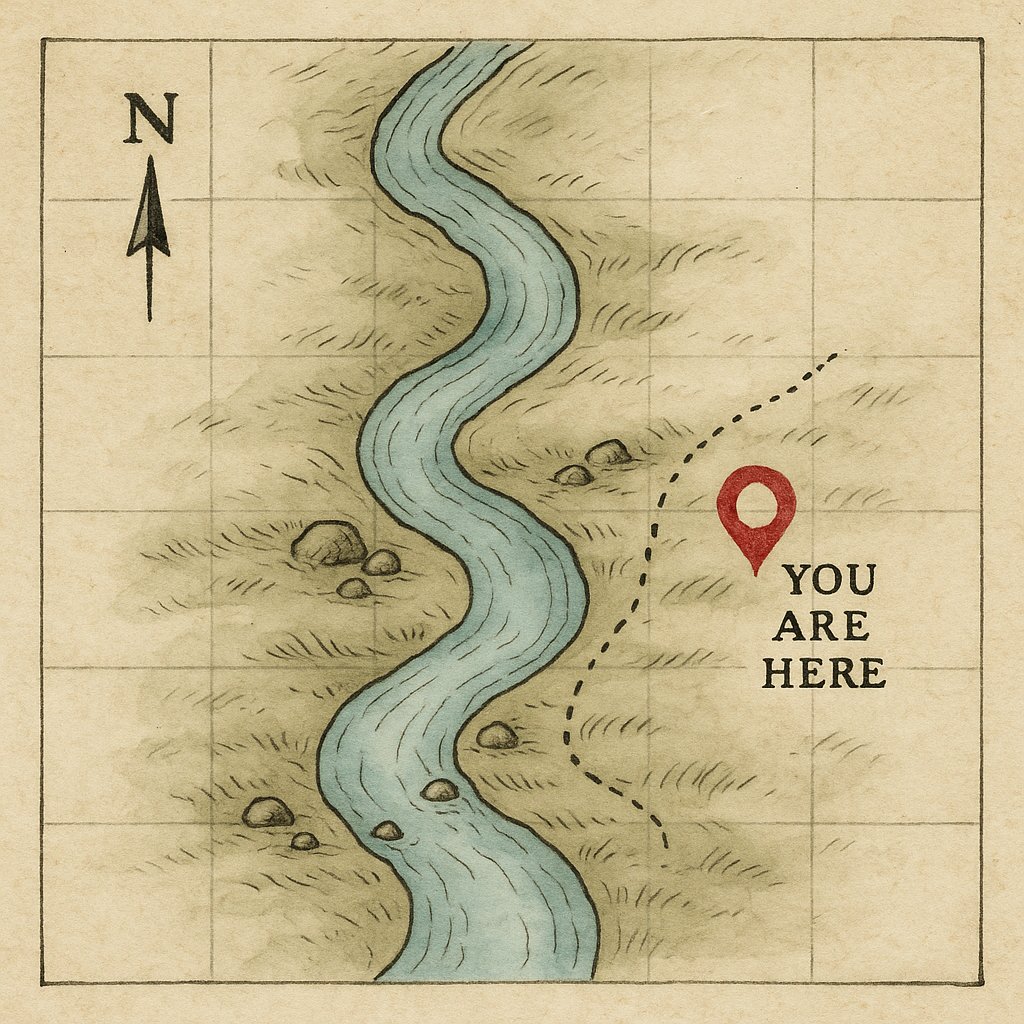
Inner Map: The River of Feeling
When emotions begin to move in meditation, they can feel like a shifting current. This stage invites you to stay close to the sensations in your body and let each feeling rise and fall without tightening around it.
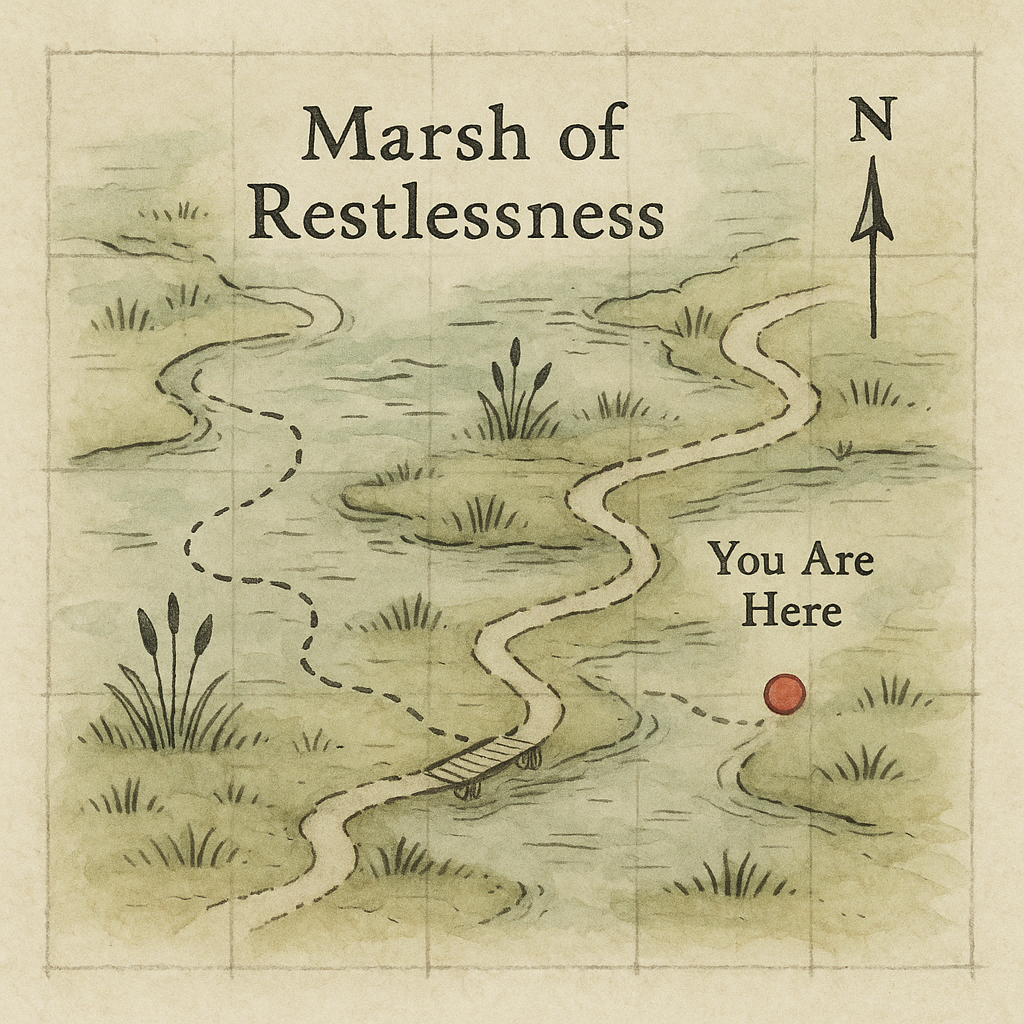
Inner Map: The Marsh of Restlessness
Restlessness is part of meditation. Sometimes the body wants to move and the mind won’t stay still. This stage invites you to slow down, anchor your attention, and let extra energy settle on its own.
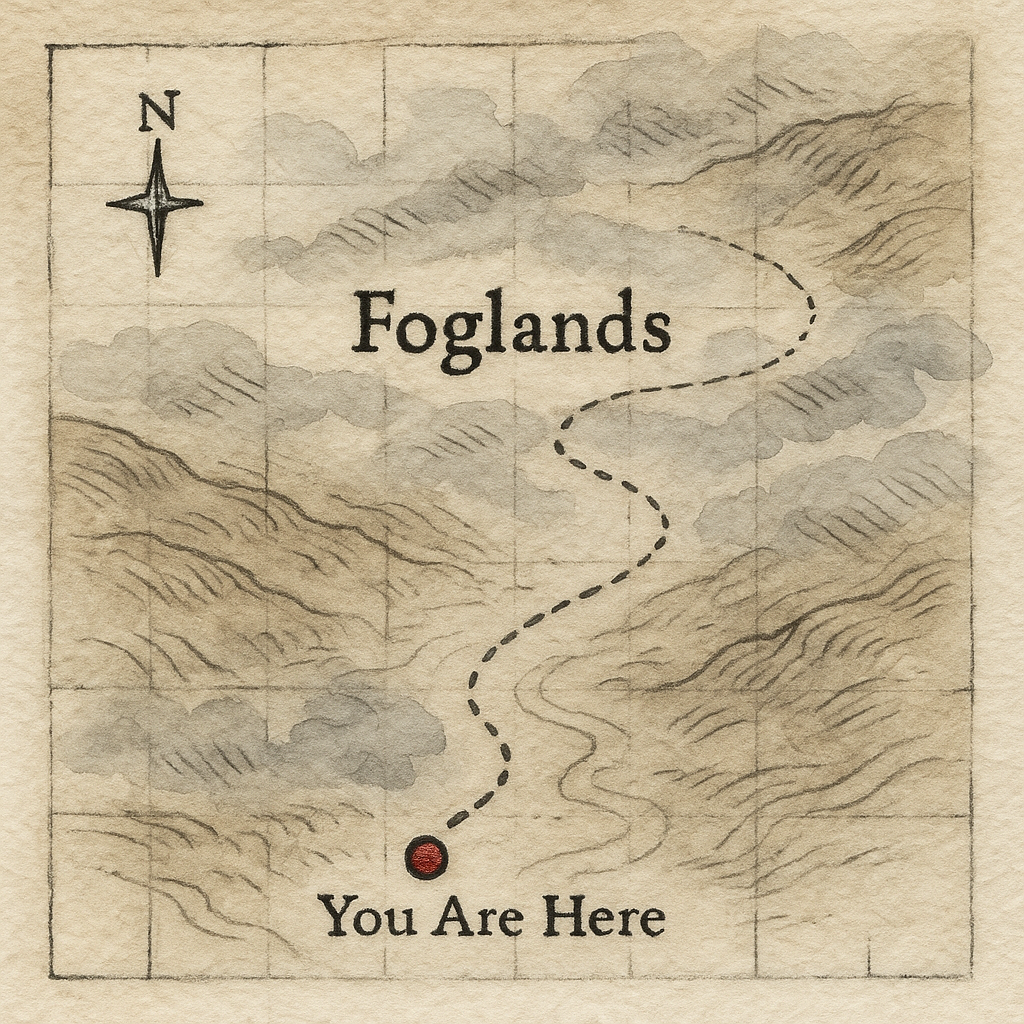
Inner Map: The Foglands
Some days the mind feels dim or hazy. In this stage of meditation, attention drifts and everything softens. Instead of fighting the fog, small adjustments help bring gentle brightness back into your practice.
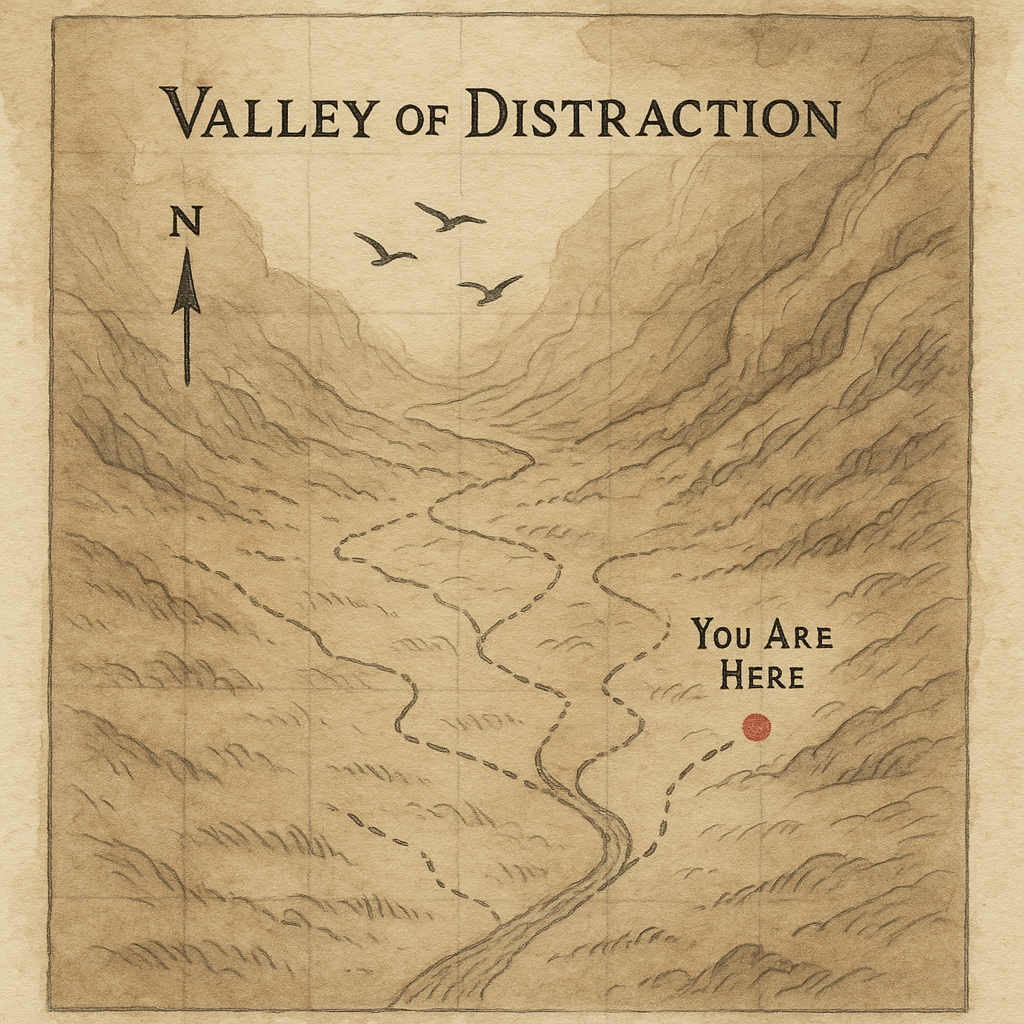
Inner Map: The Valley of Distraction
The mind wanders — that’s its nature. In this stage of meditation, thoughts move quickly in every direction. The practice isn’t to stop them, but to return with softness each time you notice you’ve drifted.