
Pure Land Farms: An Afternoon of Tibetan Self-Healing
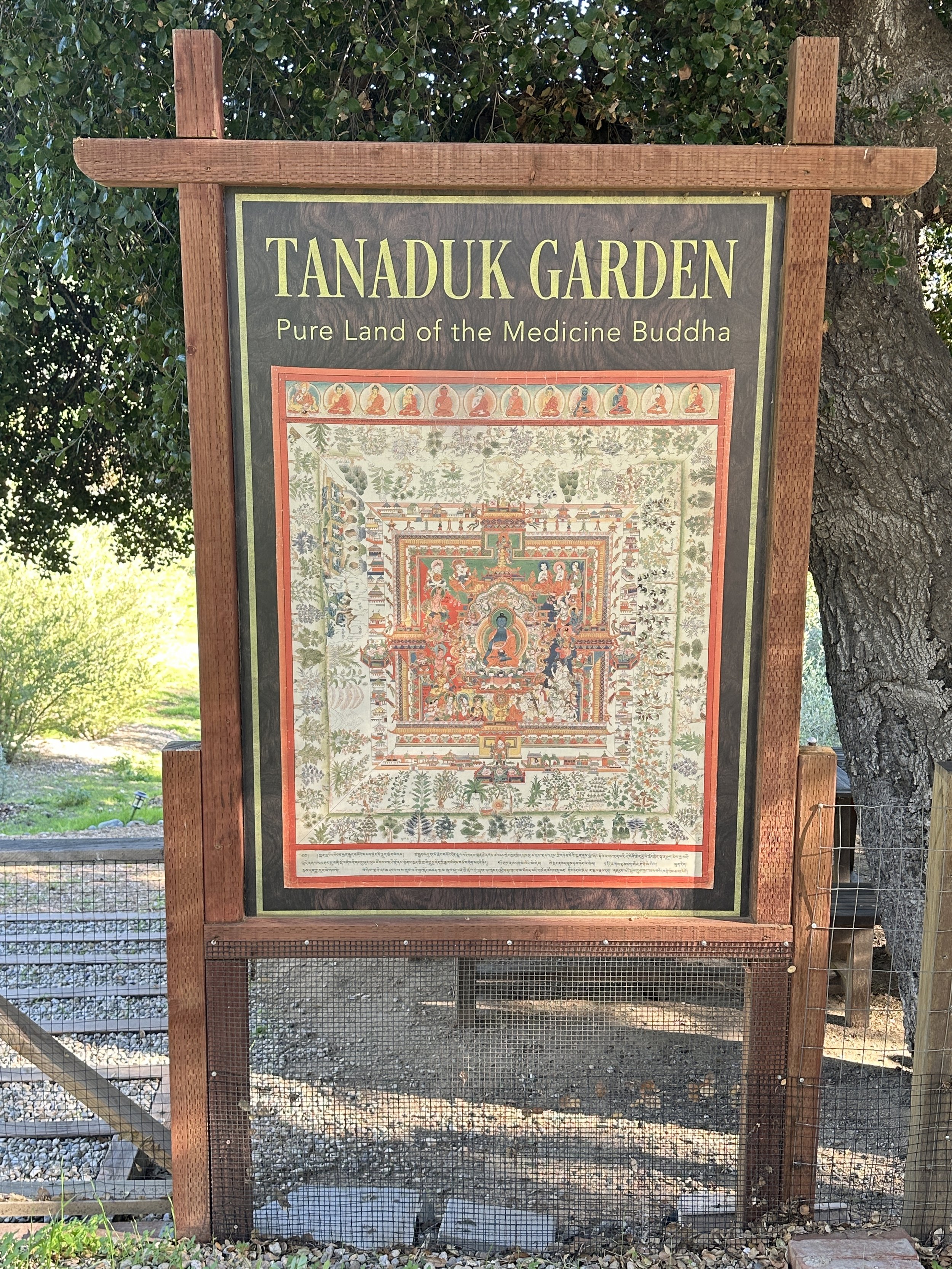
This weekend, I visited Pure Land Farms — a place I’d heard about for some time but had never experienced firsthand. As someone who manages a retreat property here in Topanga, I’m always curious about other spaces that open their land to the public in intentional ways.
The drive itself felt like part of the experience, winding through an area of Topanga I hadn’t explored before, passing gated ranches and quiet horse stables, climbing higher into open views and stillness.
I first noticed the event through a simple flyer posted outside the grocery store in town. I’d been meaning to visit Pure Land Farms for a while, and seeing it listed there felt like a small nudge to finally go.
Curiosity Around Wind
I’ve been learning more about Ayurveda lately, and I knew the Tibetan healing traditions taught at Pure Land Farms share many of the same foundational principles. Still, I came with questions. The focus of the day — healing wind element imbalance — felt especially relevant, as it’s something I’m personally prone to.
Across Ayurvedic, Tibetan, and Western traditions, people are generally understood through three core typologies, each described with different language but pointing to the same underlying patterns. Most people’s core type doesn’t change much over a lifetime, and it doesn’t need to. None of these types are problems in themselves. The work is learning how to support balance when things drift.
The wind element is especially associated with the nervous system and prone to excessive movement. It benefits from warming, grounding, oils, and nourishing foods.
Walking the Elements
We began with a slow walk through the garden. The space was arranged as a square, with each corner corresponding to one of the elements — earth, air, water, and fire.

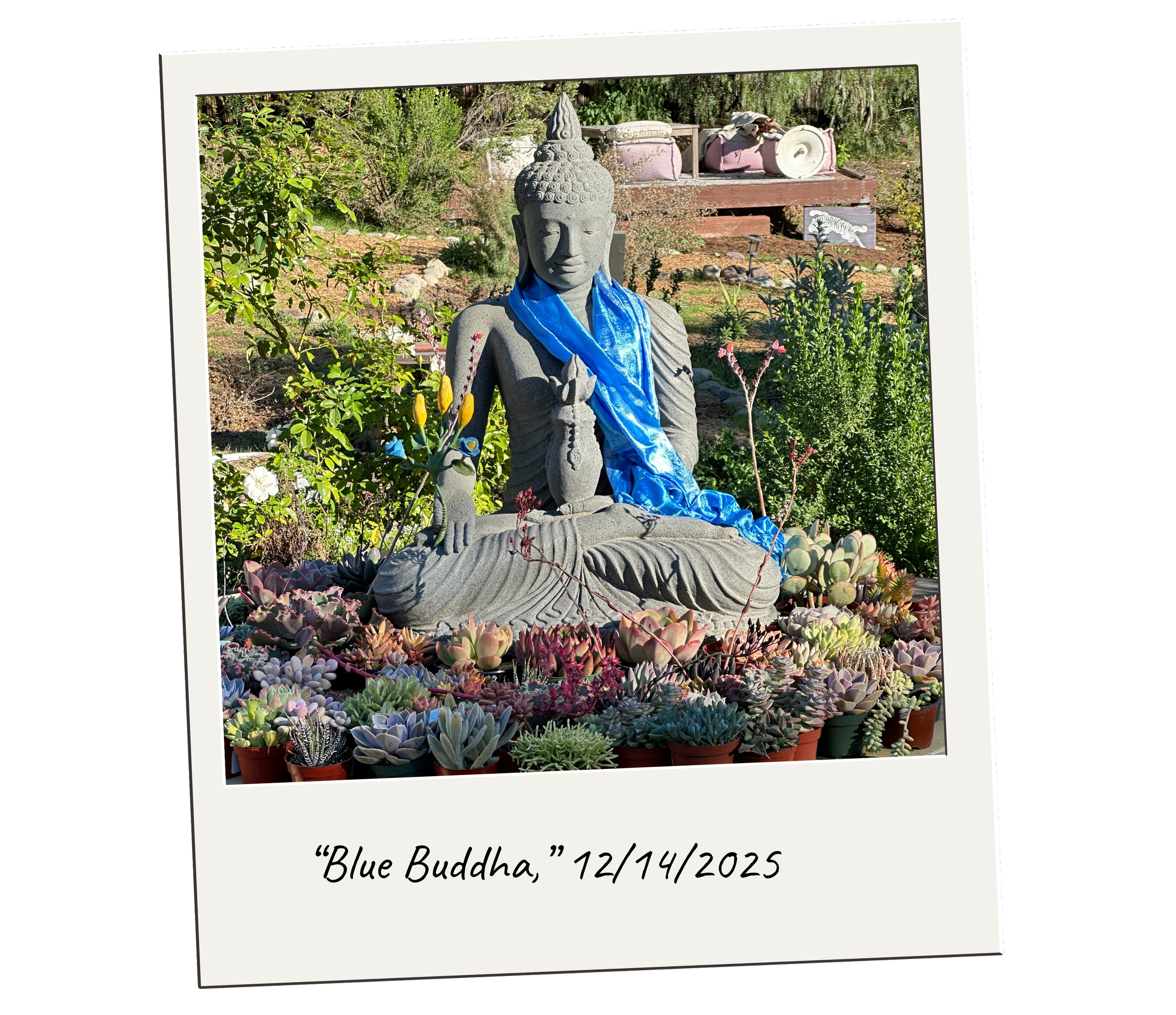
At the center stood a Buddha statue, representing ether, quietly anchoring the whole layout. Walking the perimeter and returning to the center felt both symbolic and grounding.
I found myself drawing inspiration for the zen garden we’re currently building at our own retreat center. Seeing how another space holds intention without excess helped clarify what feels essential — and what doesn’t.
Tea, Herbs, and Hands in the Soil
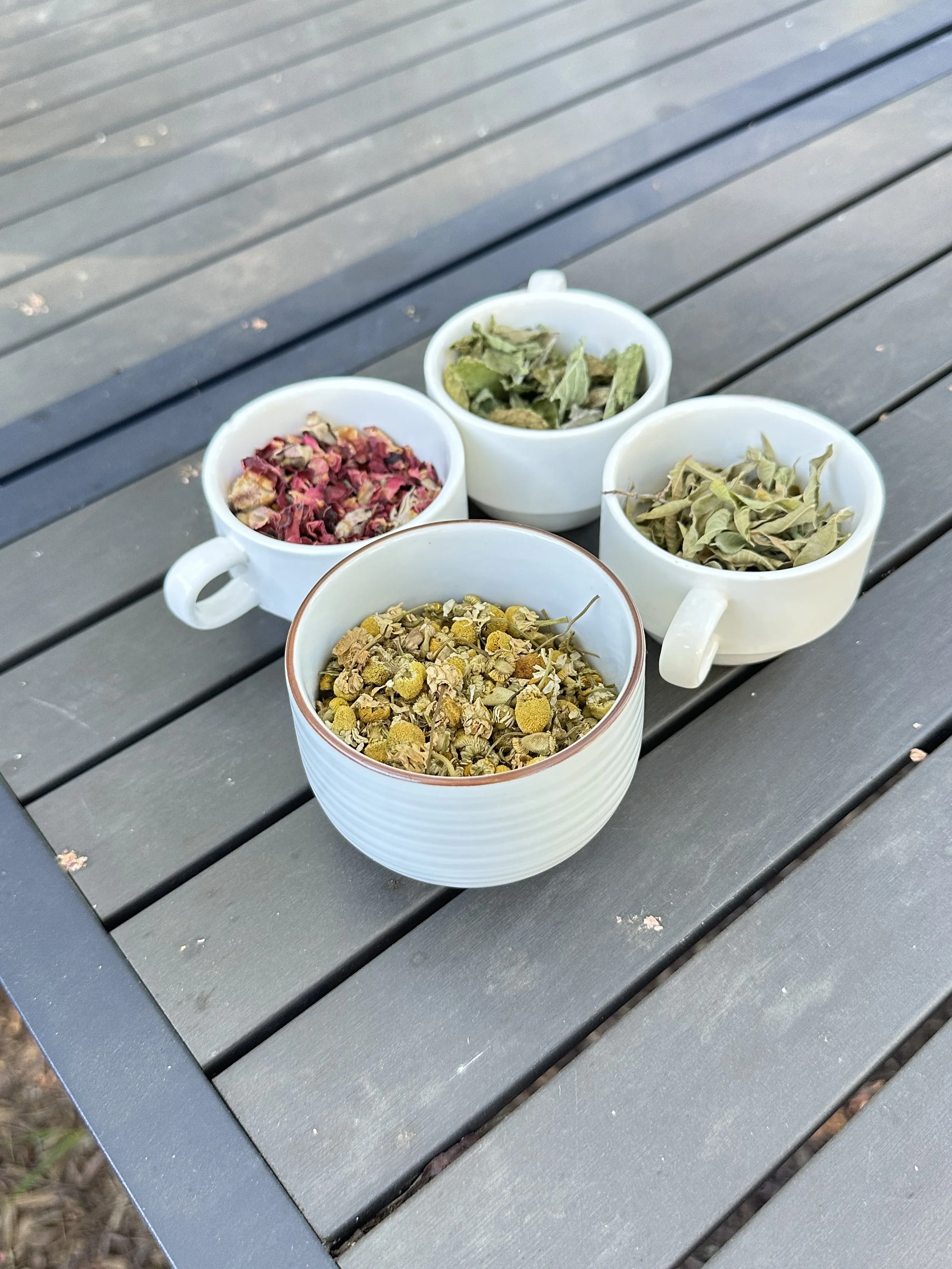
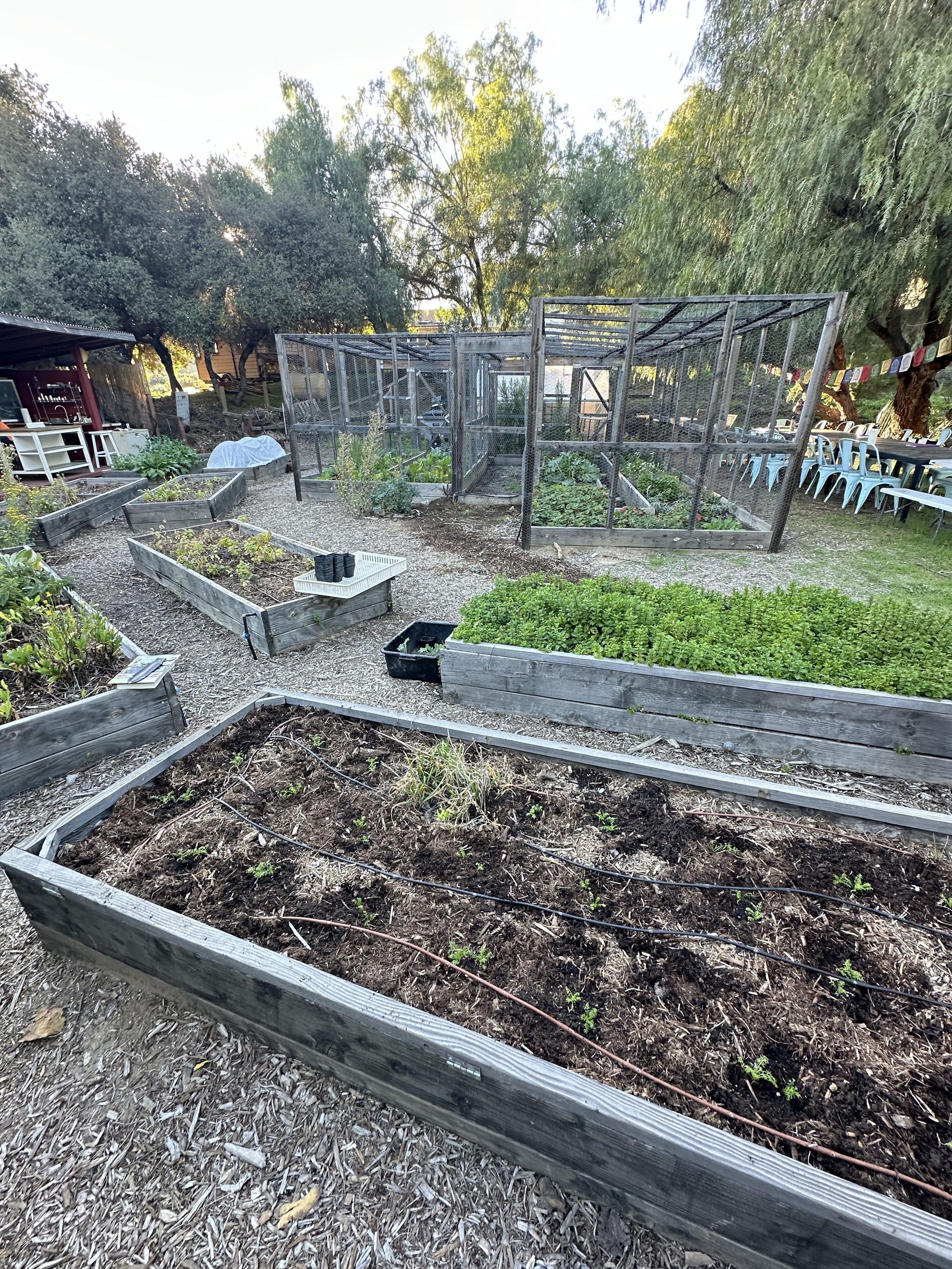
After the garden walk, we gathered under a tree and sat around a table. Tea and bread were served, with the tea crafted specifically to pacify wind. It included rose, chamomile, mint, and lemon balm, several of which were grown right there on the property.
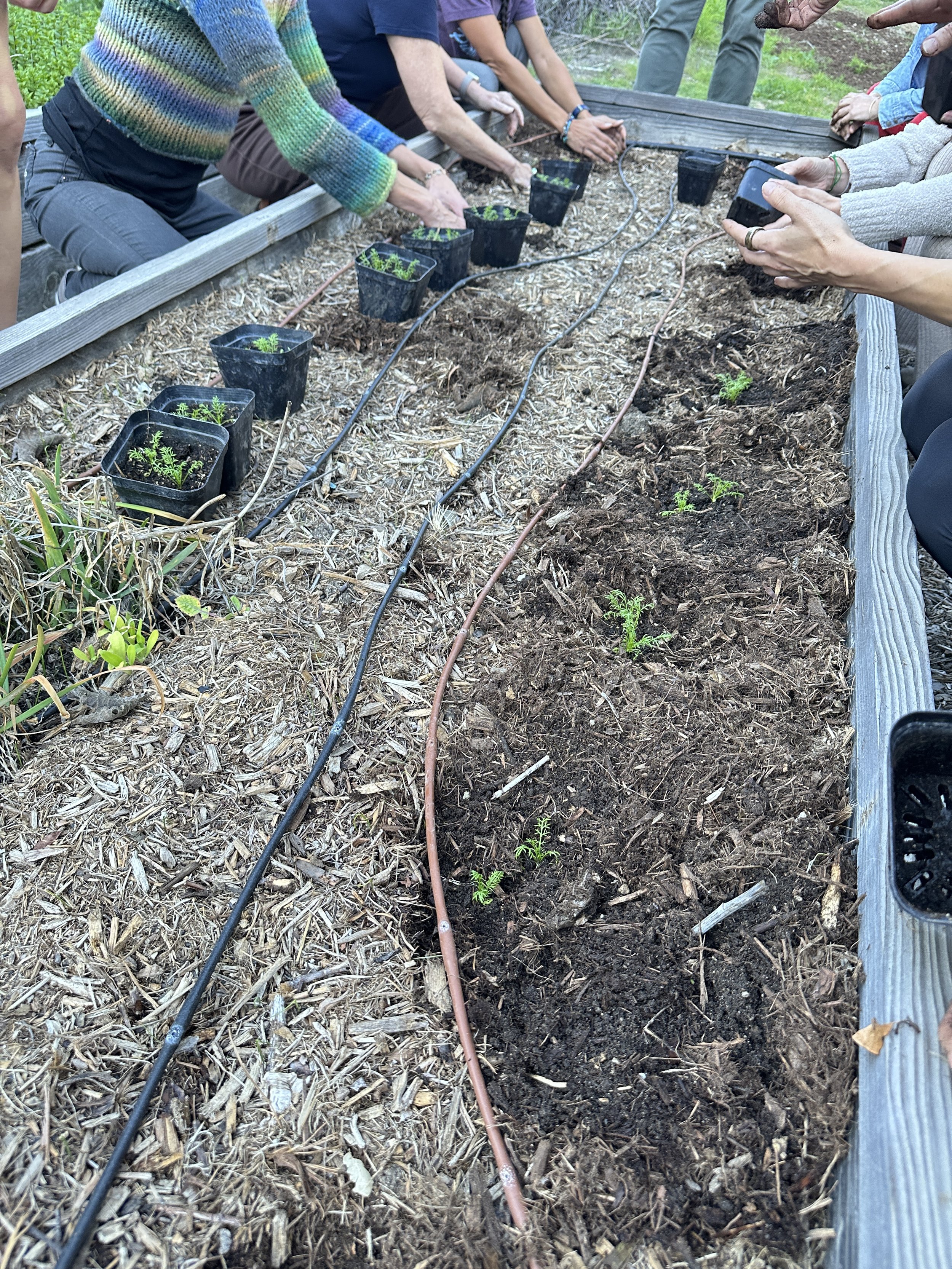
Not long after, we planted small chamomile starts together in an empty bed beside the mint. It was a simple, shared act, but it carried weight. It also sparked ideas about growing herbs in our own unused garden beds at our own property with Katy.
Inside the Temple
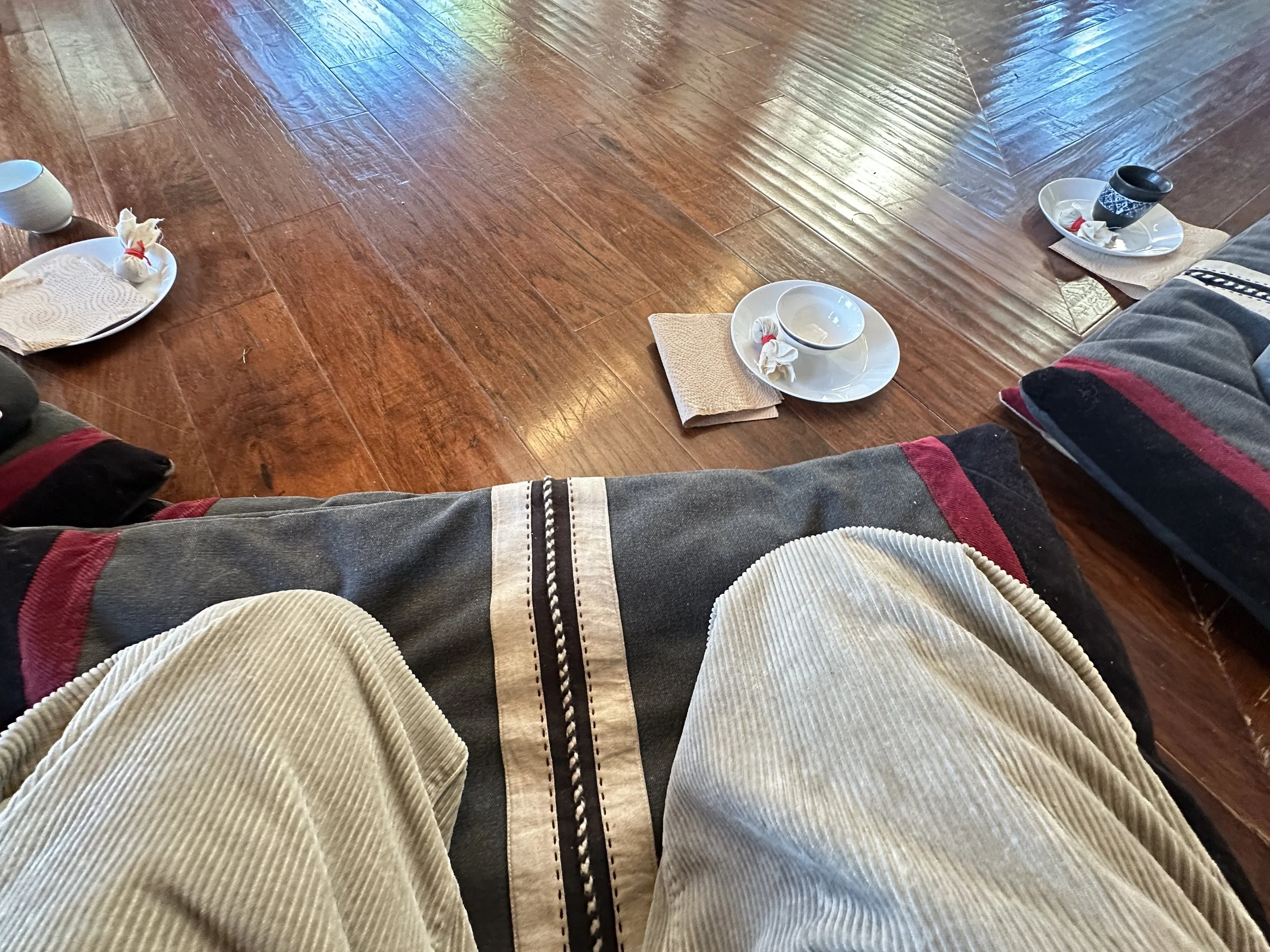
From there, we walked up to the temple for the main portion of the program. Inside, we sat in a circle on cushions before a Tibetan altar filled with rich colors, statues, and tapestries. Through the windows, the hills unfolded in soft layers, making it feel as though the practice was happening with the land rather than apart from it.
We were introduced to Horme, an oil treatment using small poultices filled with nutmeg and warming spices. Working in pairs, we gently applied them to one another — a surprisingly grounding and connective experience.
Breath, Stillness, and Integration
Next came instruction in Ninefold Purification Breathing, a wind-pacifying practice that felt subtle but deeply settling. The day closed with a meditation that allowed everything to land without effort.
By the end, my nervous system felt more relaxed than it has in a long time. It was the kind of ease that comes only from slowing down and letting things unfold in the right order.
It felt like a meaningful way to approach the close of the year — carrying forward not just new techniques, but a renewed understanding of how land, ritual, and simple practices can quietly restore balance.
